
Unlock Adventures: A guide to Grant Funding for UK Scouts
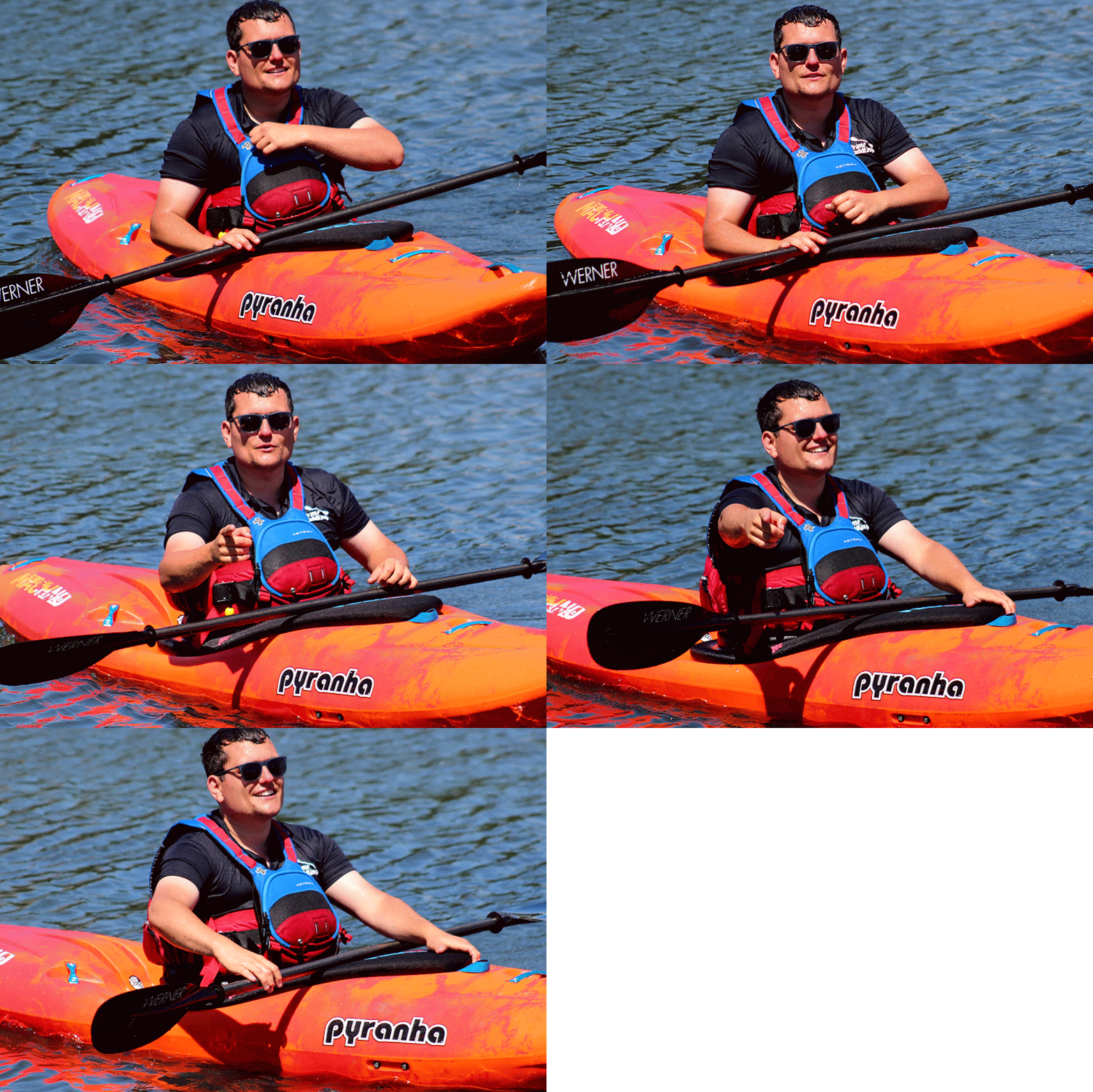
A wealth of funding opportunities to maximise the fun

Scouting is all about skills for life, adventure, and overcoming challenges together — but sometimes the cost of activities, training, and equipment can make those goals feel out of reach. The good news? There are multiple grant and funding opportunities available specifically for UK Scout members, groups, units, and volunteers that can help make exciting, permitted activities a reality.
Whether you’re planning a weekend camp, earning adventurous activity permits, or developing a bold new programme, here’s a clear run-down of the support out there.
The Dacia Partnership: Outdoor Adventure Fund
If you’re planning outdoor activities that require an Adventurous Activity Permit — like climbing, hiking, water sports or other exciting Scout adventures — this small grant can make a real difference.
What it supports: Delivery costs of outdoor adventures that benefit young people.
Who can apply: Districts, groups, Explorer Units, Scout Networks, and more.
Amount: Up to £100 or 50% of project costs for individuals/groups (capped relative to size).
How it helps: Pays towards the cost of running your activity, making outdoor fun more affordable.
Timing & conditions: Apply at least 28 days before your activity, and be prepared to report on outcomes afterward.
Tip: This is ideal for day trips or nights away — think climbing nights, coastal canoeing, or wilderness skills weekends!
The Dacia Partnership: Permits and Training Fund
This helps young people and volunteers gain the necessary adventurous activity permits and qualifications — which in turn unlocks a wider range of activities your group can safely offer.
Applications can be made for one project. Multiple permits can be included in the same project if they're similar and will be assessed together as part of the same project.
Example 1: An archery assessment (independent of or combined with a training course) would be considered one project.
Example 2: Power Boating B1 and B2 assessed in the same weekend/course would be considered one project.
Example 3: An archery and power boating assessment would be considered two projects.
What it supports: Delivery costs of external providers to run governing body qualifications and permit assessments
Who can apply: Any young person or volunteer who will support local scouts through regular use of their permit.
Amount: Up to £250 or 50% of project costs for individuals/groups (capped relative to size).
How it helps: It helps cover the assessment costs and related training of any permit listed on the Activity Permit List as detailed in the Adventurous Activity Permit Scheme.
Timing & conditions
Apply at least 28 days before your activity, and be prepared to report on outcomes afterward.
Grants must be paid into a Scouts bank account. To make it easy to access funds, this can be any Scouts account.
We expect applicants to use their permit at least five times per year.
Grants can be used solely for the project they were applied for. Should changes to the project be required, approval must be obtained in writing before they occur.
Ulysses Trust (Expedition Support Fund)
If you’re planning a challenging expedition that builds resilience, leadership and outdoor skills, the Ulysses Trust can be a major source of financial support. Their aim is to make properly-planned, adventurous expeditions accessible to all — especially when cost might otherwise hold young people back.
What it supports: High-quality expeditions in the UK or overseas that develop teamwork, leadership, outdoor skills, and personal growth. This includes multi-day treks, international expeditions, demanding terrain journeys, and skills-development training linked to your expedition plan.
Who can apply: Primarily cadet and youth organisations, but Explorer Scout Units and Scout Networks can apply for support where the activity meets their expedition criteria. Funding must directly benefit young people undertaking a structured, developmental expedition.
Amount: Grants vary based on the expedition scale, need, and impact. Awards commonly range from £300–£1,000, and can be higher for particularly ambitious or inclusive projects. The Trust typically funds a proportion of total costs rather than the full amount.
How it helps: Reduces per-person costs so that no young person is excluded due to financial barriers. Funding often supports travel, specialist equipment, training phases, and safety planning — helping leaders design more ambitious expeditions with confidence.
Timing & conditions: Applications should be submitted well in advance — ideally several months before departure. You’ll need a clear training plan, risk management approach, cost breakdown, and a post-expedition report detailing outcomes, learning, and financial reconciliation.
Tip: This fund works best for structured, developmental expeditions — for example: multi-day mountain journeys, international trekking, self-sufficient expeditions, or leadership-focused adventure programmes.
Local & External Grants
Outside UK Scout HQ support, there are external grant sources worth exploring:
Charitable trusts (e.g. Leslie Sell Charitable Trust) offer grants exclusively to Scout and Guide groups.
County/Regional grants, like those run by local Scout counties (e.g. Nottinghamshire or Essex), often support attendance at big events, training, equipment or activity costs.
Community Foundations & external funds (via Funding Central, local trusts, or sport/community grants) can support equipment, travel, inclusion programmes and more — especially if your activity offers strong community benefit.
Pro tip: Many trusts prioritise areas of higher need or specific themes — check eligibility early!
Planning & Application Tips
Making a successful grant application is about clarity and impact:
Be clear about purpose: What will the money fund? How will participants benefit?
Match your budget: Many grants request matched funding or evidence of contribution.
Keep it timely: Apply with plenty of notice before your activity dates.
Report outcomes: Grant bodies often require a short follow-up on how funds were used — use this as an opportunity to share stories and photos!
Final Thought: Make It Happen
Funding doesn’t have to be a barrier to adventure — it can be a springboard. With a mixture of national, partnership and local grants, there’s support available for training, permits, outdoor trips, new sections and more.
Start conversations in your group, build a simple plan, and put in an application — you might fund the next big journey your Scouts will never forget.

How can GoSport help?
GoSport Activity Centre has a strong track record of supporting Scout groups and volunteers across the UK with training and assessment related to the Scout Adventurous Activity Permit Scheme. While the Scout Association does not require specific governing-body training before applying for an activity permit, we help volunteers prepare practically and confidently for the assessment process.
Permit Training
We deliver Scout-focused training that helps candidates understand the Adventurous Activity Permit Scheme, including:
What assessors will look for in an assessment ⟶ technical competence, rule knowledge, and personal suitability.
How POR and the Scout guidance define the structure and responsibilities of permits.
The differences between Personal, Leadership and Supervisory permits and how they relate to group size and supervision levels (e.g. max 8 craft/12 people leadership limit).
This training gives volunteers the knowledge they need to be ready for their assessment with confidence.
Paddlesport Assessments
GoSport can arrange practical paddlesport assessments aligned with the Scout scheme:
We provide real-world paddlesport settings and scenarios where candidates demonstrate skills and experience.
Our assessors help you prepare documentation and paddlesport techniques ahead of your assessment.
Note: Scout permit assessments are not automatically tied to external qualifications, but training based on Paddle UK standards or similar can be a useful way to build skills before assessment.
Why not read our blog on the new Permits Scheme which helps decipher the POR Jargon
Further information on water classifications can be found here and a list of classifications by county can be found here.


Comments